
The images coming out of the Caribbean are both heartbreaking and familiar. On October 28, 2025, Hurricane Melissa didn’t just hit Jamaica; it rewrote the record books. With the fury of 185 mph winds and a crushing 13-foot storm surge, it has left a trail of devastation that will take years to mend (Reuters, 2025).
The numbers are staggering, but they are not just statistics. They represent lives upturned, homes lost, and livelihoods shattered. The confirmed death toll across the Caribbean has risen to at least fifty souls (Reuters, 2025), a number that speaks to the storm’s brutal power. In Jamaica’s western parishes, the breadbasket of the island, the damage to farms and infrastructure is a blow that will be felt long after the winds have faded (Reuters, 2025).
So, we must ask the difficult question: why was this storm so ferocious?
The answer, scientists tell us, lies in the ocean. Hurricane Melissa underwent a process of “rapid intensification,” feeding on ocean temperatures that were unusually, and alarmingly, warm (The Guardian, 2025). This isn’t a one-off event; it’s a pattern. It is the climate crisis, playing out in real-time on our television screens and in the lives of our global neighbors.
Hurricane Melissa is more than a disaster; it is a warning. And warnings demand action. For all of us working in, supporting, or caring about sustainable development, this moment clarifies our path forward.
1. Resilience is No Longer an Optional Feature.
We must stop planning for the climate of the past. Storms like Melissa are becoming the new standard, and our programs from agriculture to infrastructure to housing, must be built to withstand them. Investing in resilience today is far less costly than rebuilding from scratch tomorrow.
2. Elevate Women as Climate Leaders.
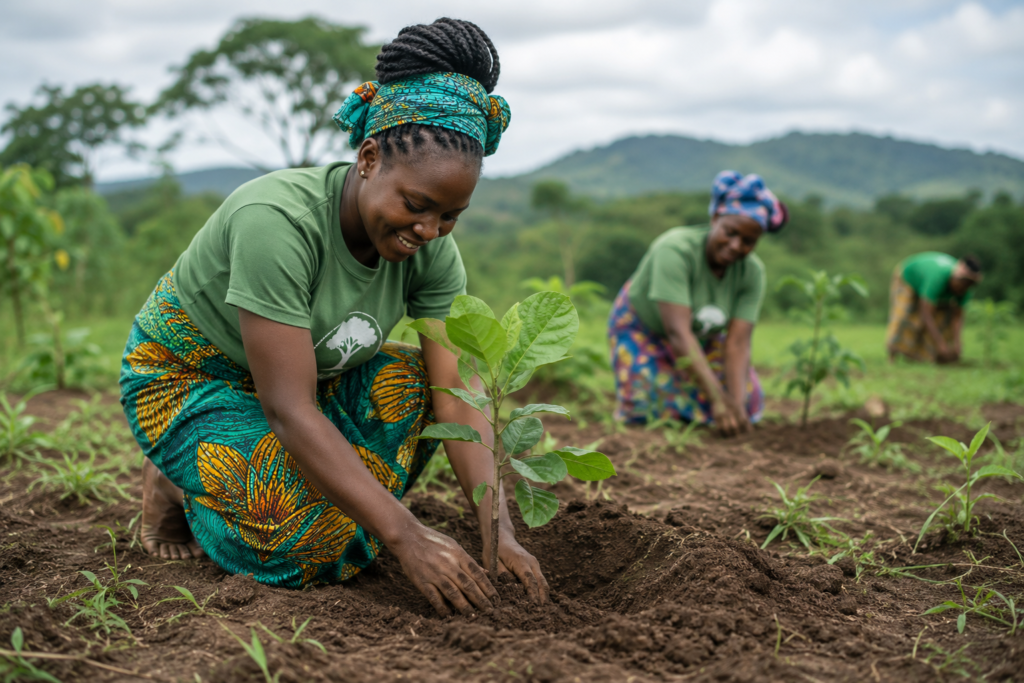
The stark reality is that climate disasters disproportionately impact women. Yet, women are consistently underrepresented in the rooms where decisions about response and resilience are made. It is imperative that we actively support and fund women-led climate action. Initiatives like the Green Queen Initiative 2025 are vital to closing this gap, ensuring that the wisdom and strength of women are at the forefront of the solution.
Explore our women-led climate action work: Read more
3. Break Down Silos, Build Up Partnerships.
A storm of this magnitude recognizes no borders. An effective response cannot be fragmented. We need a new level of collaboration between international NGOs, local governments, community leaders, and the private sector. Coordination is the key to efficient relief and a resilient recovery.
At the Halima Abbey Foundation, this tragedy only deepens our resolve. Our work to empower women as leaders in climate resilience and environmental innovation has never been more critical. We have a choice to make: be paralyzed by the scale of the challenge, or be propelled by the urgency of the solution.
The future is not just something we enter; it is something we build. Together, let’s build one that is resilient, equitable, and leaves no one behind.
See how we partner with communities: Learn more
Sources Cited:
- Reuters. (2025). “Hurricane Melissa Causes Widespread Damage in Caribbean.”
- The Guardian. (2025). “Warm Oceans Supercharged Hurricane Melissa, Scientists Say.”
What are your thoughts on building community resilience? Share your ideas in the comments below.
#ClimateLeadership #ResilienceBuilding #WomenForClimate #GreenQueenAfrica